Specialized Course in Neuromuscular Control for Injury Prevention and Sports Performance
El control neuromuscular y la coordinación motriz desde la perspectiva de rendimiento deportivo y la reducción de la incidencia lesiva.
-
Duration:
-
Start Date:
-
Dedication:
6–8 hours per week
-
Program Type:
Specialized course (executive education)
-
Modality:
Online, asynchronous
-
Language of Instruction:
Spanish/English
-
Difficulty Level:
Intermediate
This training is based on understanding the role of neuromuscular control and motor coordination from a dual perspective: sports performance and injury incidence reduction. Today, it is widely recognized that maintaining an active lifestyle across all stages of life is essential due to the well-documented health benefits. However, it is also important to acknowledge that participation in sports activities carries inherent injury risks, which can, in many cases, interrupt athletic participation.
In particular, severe injuries—such as anterior cruciate ligament ruptures or ankle sprains—are often associated with long-term consequences, including early-onset knee osteoarthritis and disability. Therefore, the prevention and rehabilitation of sports injuries has become a crucial aspect within the fields of physical activity and sport.
The proper functioning of neuromuscular joint control plays a key role in both sports performance and the prevention and recovery of injuries. Joint injuries are often linked to mechanoreceptor impairment, resulting in a decrease in protective signaling to the joint. This, in turn, can negatively affect normal neuromuscular control and consequently reduce joint stability.
1. Contextualization of Neuromuscular Control and Coordination in Team Sports
2. Physiology of the Sensorimotor System: The Basis of Joint Stability
3. Deficits in Neuromuscular Control and Motor Coordination as Injury Risk Factors
4. Training Methodology for Improving Neuromuscular Control
What includes this program?
Access to the Innovity® Method: Science, Methodology, and Application
Expert Mentorship: testimonials, best practices, and insights from experts—directly from the field
Access to materials anytime, anywhere, and from any device
24/7 Support, synchronous or asynchronous, according to your preference, provided by the Innovity professional team
Case Method: effective use of learned tools and concepts
Self-Assessments to measure learning progress
Comprehensive final exam
Certificate of completion or attendance, as applicable
Pricing
€ 220
Our Expert
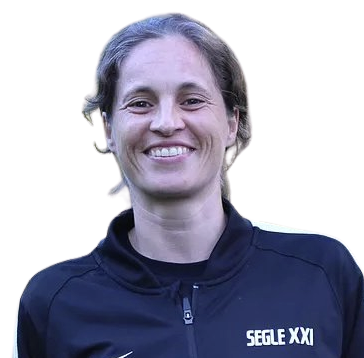
Azahara Fort Vanmeerhaeghe
PhD in Physical Activity and Sport Sciences from Universitat Ramon Llull (URL). She holds a Bachelor’s degree in Physical Activity and Sport Sciences from INEFC (University of Barcelona), a Diploma in Physiotherapy from URL, and a Master’s degree in High-Performance Sport from the International Olympic Committee (IOC).In the academic field, she has collaborated with several universities in departments of Physiotherapy and Sport Sciences. She is currently Associate Professor in the Bachelor’s program in Physical Activity and Sport Sciences, leads the research line on “Injury Prevention and Rehabilitation” within the consolidated research group SAFE (SGR 00543), and coordinates elite athletes at the Faculty of Psychology, Education and Sport Sciences of URL (Universitat Ramon Llull). She previously served as Coordinator of the Master’s program in Readaptation to Physical Activity and Sport at the University of Girona (2013–2016) and as Director of the Master’s program in Physiotherapy for Team Sports at the Faculty of Health Sciences (Blanquerna, URL) (2018–2022). She is the author of numerous peer-reviewed scientific articles with international impact (ORCID: 0000-0002-5071-1084, H-index: 24). Her research focuses on neuromuscular assessment and training aimed at enhancing performance, preventing injuries, and supporting rehabilitation in sport. She is accredited in Research (AQU 2021) and holds two research evaluation periods (sexenios) granted by AQU (2008–2013 and 2014–2019).In the professional field, she has worked for over 25 years as a physiotherapist and strength and conditioning coach with elite athletes, particularly women, in sports such as skiing, tennis, field hockey, water polo, and football. Since 2008, she has served as strength and conditioning coach and Coordinator of the Health and Performance Department of the elite basketball program SIGLO XXI (Spanish and Catalan Basketball Federation).