Specialized Course in Injury Biomechanics in Football
Mecanismos lesivos y áreas relacionadas con las lesiones en el fútbol
-
Duration:
1 month
-
Start Date:
10/12/2025
-
Dedication:
6–8 hours per week
-
Program Type:
Specialized course (executive education)
-
Modality:
Online, asynchronous
-
Language of Instruction:
Spanish/English
-
Difficulty Level:
Beginner
The primary objective of this program is to provide a comprehensive understanding of injury mechanisms and the factors involved in how football players sustain injuries. To achieve this, the content is structured into two modules: the first focuses on joint injuries, while the second addresses muscular and tendinous injuries. This division represents a foundational classification of injuries affecting the musculoskeletal system, chosen because the mechanisms and loads that impact these tissues differ markedly.
The first module, comprising the first two conceptual axes, focuses on joint injuries. The first axis describes the different movement, jumping, and ball-striking skills typically performed by football players. The second axis focuses on the injury biomechanics of lower-limb and lumbar spine joint pathologies, with special attention given to anterior cruciate ligament (ACL) injuries, due to their high incidence and severity.
The second module, corresponding to conceptual axes three and four, examines muscular and tendinous injuries. The third axis focuses on injurious loading patterns that primarily affect muscle and tendon structures, particularly traction forces, which are linked to the elastic properties of these tissues. This axis also addresses repetitive loading mechanisms as a potential origin of certain overuse injuries, which can lead to either acute or more prolonged injury mechanisms.The fourth axis analyzes the mechanisms underlying the most common muscular and tendinous injuries in football players.
1. Generic Movement Actions in Different Planes
2. Analysis of Joint-Related Injuries
3. Generic Movement Actions Predominantly in the Sagittal and Transverse Planes with Horizontal Direction
4. Analysis of Muscle and Tendon Injuries
What includes this program?
Access to the Innovity® Method: Science, Methodology, and Application
Expert Mentorship: testimonials, best practices, and insights from experts—directly from the field
Access to materials anytime, anywhere, and from any device
24/7 Support, synchronous or asynchronous, according to your preference, provided by the Innovity professional team
Case Method: effective use of learned tools and concepts
Self-Assessments to measure learning progress
Comprehensive final exam
Certificate of completion or attendance, as applicable
Pricing
€ 220
Our Expert
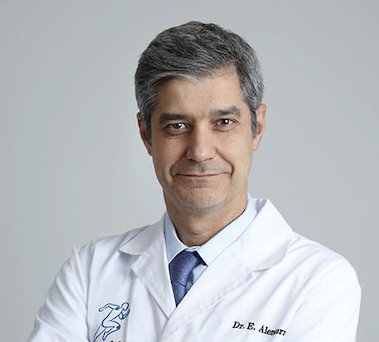
Eduard Alentorn Geli
Dr. Eduard Alentorn finished his Bachelor’s degree (BSc) in Sciences of Physical Activity and Sports (National Institute of Physical Education, University of Barcelona, Barcelona, Spain) in 2002. He is also licenced in Medicine (MD), University of Barcelona Medical School, Barcelona, Spain, from 2007. He has a Master of Science (MSc) in Training of elite athletes of team sports (National Institute of Phyical Education, University of Barcelona, Barcelona, Spain) finished In 2008, and another Master of Science (MSc) in Clinical Biomechanics of the Musculoskeletal System (Rovira i Virgili University, Reus, Spain). Between 2003 and 2008 he developed his Degree of Philosophal Doctor (PhD), Department of Medicine, University of Barcelona Medical School, Barcelona, Spain.
Eduard has received numerous honors and awards throughout his career. In terms of his scientific output, he has published more than 150 articles in scientific journals.
Dr. Eduard Alentorn-Geli worked in the United States after obtaining his medical license, completing two postgraduate fellowships at Duke University in sports medicine and at the Mayo Clinic in shoulder and elbow reconstruction. He then returned to Barcelona, Spain, where he practices as an orthopedic surgeon specializing in arthroscopic knee, shoulder, and elbow surgery.
His extensive international experience and dual training in medicine and sports science give him a unique advantage in his professional practice.