Specialized Course in Complex Speed Training
Velocidad física individual, optimización de la coordinación inter-intra jugador y adaptación del complejo percepción-acción frente a contextos cambiantes
-
Duration:
1 month
-
Start Date:
10/12/2025
-
Dedication:
6–8 hours per week
-
Program Type:
Online, asynchronous
-
Modality:
Online, asynchronous
-
Language of Instruction:
Spanish/English
-
Difficulty Level:
Intermediate
The interpretation of performance in football has traditionally been dominated by a reductionist approach, analyzing the different dimensions of athletes individually and in isolation. This linear and causal vision seeks to understand behaviors by breaking them down into parts, assuming that the body functions like a perfect machine. Once the individual components (technical, tactical, and physical) are maximized, it is believed that they can be combined to achieve sporting success. While this approach may sometimes yield results, it fails to capture the intrinsically dynamic, complex, and interconnected nature of the game.
From the perspective of ecological psychology and dynamical systems theory, a football team is not merely the sum of its parts, but rather a superorganism: a complex adaptive system in which collective behavior emerges from the continuous interaction between players and a constantly changing environment.
Within this framework, speed transcends the individual and mechanical dimension, encompassing team speed and game speed. This implies recognizing that players’ behaviors are part of a dynamic and relational system. Thus, discussing complex speed involves understanding it as a manifestation of the player–team system, which must perceive and act functionally in relation to environmental conditions within real time constraints.
According to these considerations, team preparation should not focus solely on improving individual physical speed, but also on optimizing intra- and inter-player coordination, and the adaptation of the perception–action coupling to changing contexts. Consequently, the primary objective of complex speed training in football is to facilitate faster interpretation of environmental stimuli by both players and teams, expanding the meaningful perceptual–motor field at the individual and collective levels, and developing anticipatory systems for prospective outcomes, all aimed at achieving optimal performance under temporal stress.
1. Theoretical Framework and Methodological Principles of Complex Speed Training
2. Rethinking Speed: Components Structuring the Manifestations of Complex Speed
3. Manifestations of Complex Speed
4. Application Methodology for Complex Speed Training
What includes this program?
Access to the Innovity® Method: Science, Methodology, and Application
Expert Mentorship: Testimonials, Best Practices, and Insights from Experts—Directly from the Field
Access to Materials Anytime, Anywhere, and from Any Device
24/7 Support, Synchronous or Asynchronous, According to Your Preference, Provided by the Innovity Professional Team
Case Method: Effective Use of Learned Tools and Concepts
Self-Assessments to Measure Learning Progress
Comprehensive Final Exam
Certificate of Completion or Attendance, as Applicable
Pricing
€ 220
Our Expert
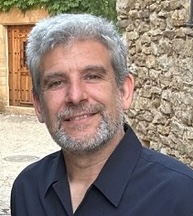
Javier Jorge Vizuete
PhD in Sports Performance from the University of Barcelona. Bachelor’s Degree in Sport Sciences from the National Institute of Physical Education of Catalonia (INEFC, University of Barcelona). In the academic field, Dr. Javier Jorge has consistently focused on understanding the complexity of sport and the athlete. He has been actively involved in university teaching in postgraduate programs related to sports performance and injury prevention, as well as in teacher education degrees. He has also undertaken administrative responsibilities, notably serving as Coordinator of the Physical Education track at the International University of Catalonia. His teaching activity has centered on subjects related to motor learning and development, motor play, and the evolution and development of physical fitness. He has worked as a strength and conditioning coach for elite basketball clubs and players, including FC Barcelona. He also combined his role as strength and conditioning coach with that of coordinator of the conditioning structure at Real Club de Polo’s field hockey program. In recent years, his work has focused particularly on the education and development of young athletes, with a specific emphasis on understanding and enhancing complex speed in team sports.